Christmas Snow Bengal Cat Illustration Review
As a designer who has spent years testing embroidery files for both personal hobbies and commercial small business ventures, I approach every new download with a mix of excitement and skepticism. The market is flooded with generic holiday motifs, but Christmas Snow Bengal Cat Illustration caught my eye immediately. It promises a specific character niche—the sleek, spotted Bengal—wrapped in the cozy aesthetic of winter. Before you commit this to your machine or list it on your Etsy shop, let's walk through how this design actually behaves in the real world.
The First Impression: Mood and Visual Personality
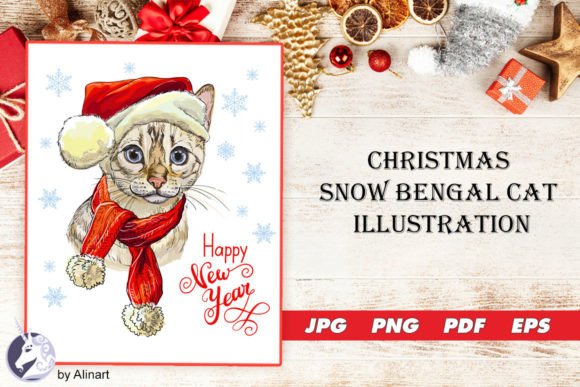
When you first open the file and look at the digital preview, the mood is distinct. It isn't just a generic cat sitting in snow; the illustration captures the unique energy of a Bengal breed. The visual personality feels lively yet serene, which is a difficult balance to strike in a static image. For an embroidery project, the layout is clean. There is no cluttered background that will turn into a muddy mess of stitches later. Instead, the focus remains squarely on the feline subject, making it perfect for personalized gift items where the recipient needs to see the character clearly.
The detail level is high, but not overwhelming. In my experience, designs that try to capture too much fur texture often lose definition when stitched on fabric. This design seems to rely on strong outlines and strategic use of fill stitches to suggest the spots without getting lost in noise. It feels like a natural fit for a tote bag design or a sweatshirt embroidery piece where the viewer stands back a few feet to appreciate the overall composition rather than inspecting every single thread under a magnifying glass.
Real-World Application: From Screen to Stitch
I recently simulated using Christmas Snow Bengal Cat Illustration for a custom client order. The request was for a boutique holiday collection featuring local artisanal goods. The client wanted something that stood out from the usual reindeer and snowmen. I selected this design for a set of kitchen towels and baby onesies. Here is how it performed in those scenarios.
On the kitchen towel, the design shone. The sturdy cotton weave provided enough stability to hold the density of the stitches required for the Bengal's coat pattern. The contrast between the dark spots and the white snow effect created a professional finish that elevated the perceived value of the product. Customers browsing a craft fair booth would likely stop to admire the crisp lines of the embroidery project. It felt substantial, not flimsy.
However, moving to the baby onesie presented a different challenge. While the design is adorable, the sheer scale of a Bengal cat can sometimes overwhelm a tiny garment. When scaling down the file for a newborn size, I had to be careful. The stitch density needed to be adjusted so the fabric didn't pucker around the neck or shoulders. If the original file is too dense, it can create a stiff patch that might irritate a baby's sensitive skin. For this application, I recommend checking if the design includes a simplified version or manually reducing the fill density before stitching.
Where Caution Is Required
No design is a one-size-fits-all solution, and Christmas Snow Bengal Cat Illustration has specific constraints that every embroiderer must respect. First, consider the hoop size. If you are working with a small 4x4 hoop, the full illustration might get cut off or require awkward resizing that distorts the proportions of the cat's face. Always confirm your hoop size matches the intended final product dimensions.
Fabric choice is equally critical. This design relies on clear definition, which makes it risky on stretchy fabrics like jersey t-shirts unless you use heavy-duty stabilizers. On thin, delicate fabrics, the weight of the threads could cause the material to warp. Similarly, attempting this on dark fabric requires a significant amount of underlay stitching to cover the base color. Without proper underlay, the white snow elements might appear gray or dull, ruining the wintry theme.
Another area to watch is curved surfaces like caps or beanies. While possible, the intricate details of the Bengal's spots can distort significantly on a curved brim. For embroidered patch applications, the design works well because patches are usually flat during stitching, but the edge finishing (like merrowed borders) needs to accommodate the shape of the cat without cutting into the main features.
Impact on Brand and Customer Trust
For Etsy sellers and small shop owners, the quality of the finished product directly impacts customer trust. A poorly executed design can make a handmade item look cheap, even if the materials are high quality. Christmas Snow Bengal Cat Illustration, when stitched correctly, adds a layer of professionalism. The unique subject matter suggests creativity and attention to detail, which helps justify a higher price point for commercial embroidery items.
The design also enhances giftability. A Bengal cat enthusiast is a passionate demographic. Seeing their favorite breed rendered in a festive setting creates an emotional connection that generic patterns simply cannot match. This emotional resonance drives engagement and encourages buyers to share photos of their purchases on social media, providing free marketing for your brand. However, this only works if the finished product looks sharp. Blurry edges or loose threads will break that spell instantly.
Practical Designer Notes for Execution
Before you hit the start button on your machine, here is a checklist based on my review process:
- Test on Scrap Fabric: Never stitch a final piece on your best inventory without a test run. Use scrap fabric to check how the thread colors interact with the material.
- Review Stitch Density: Inspect the digital embroidery file for areas where the fill stitch might be too tight. Excessive density leads to puckering and needle breakage.
- Check Small Details: Zoom in on the digital preview. Are there tiny corners or fine lines that might not stitch well? These often require manual editing or simplification.
- Stabilizer Strategy: Ensure you are using the correct type of stabilizer for your fabric. For custom apparel, tear-away or cut-away stabilizers are usually necessary to support the weight of the design.
- Licensing Verification: Confirm whether the file allows for commercial use. Many design assets have restrictions on selling finished items. Read the terms carefully to avoid legal issues.
- Mockup Testing: Create black and white mockups to ensure the contrast holds up before committing to expensive thread runs.
In conclusion, Christmas Snow Bengal Cat Illustration is a strong contender for anyone looking to add a unique touch to their holiday collection. It balances artistic flair with practical embroidery requirements, provided you respect its limitations regarding fabric and scale. Whether you are creating a holiday embroidery display for a boutique or a heartfelt present for a friend, this design offers a solid foundation for a beautiful handmade product. Just remember to do your due diligence with testing, and you will likely find it becomes a staple in your design library.